
Cybersecurity Services in Yonkers, NY
Home / Cybersecurity Services
Yonkers Businesses Are Targeted Because of What They Hold, Not Because of Their Size
Attackers do not choose targets based on headcount. They choose based on data value, compliance exposure, and the likelihood that IT controls are thin. A Yonkers healthcare practice holds patient records worth ten times the value of retail data on the dark web. A financial advisory firm under NYDFS Part 500 holds account credentials and client financial records. A law firm holds privileged communications that can make or break litigation. Size is not the variable. Data sensitivity is, and Yonkers is concentrated with businesses that hold exactly the kind of data that makes them targets.
KL Tech Consulting is a leading IT partner built for the specific threat profile of the Yonkers market. We start with a risk assessment, not a product catalog. We align the security program to the compliance framework your industry actually operates under. And we build monitoring and response capability that reflects the reality of how attacks on small and mid-sized businesses actually happen, which is mostly through email, credentials, and unpatched endpoints, not sophisticated exploits.
What Our Cybersecurity Services Include
Endpoint detection and response on every managed device, not just servers.
Email security with anti-phishing, spoofing prevention, and link scanning.
MFA enforcement and conditional access policy management for all users.
Vulnerability scanning with risk-prioritized remediation, not just a report.
HIPAA, NYDFS Part 500, and SHIELD Act compliance alignment built in.
Dark web credential monitoring for domains and email addresses you own.
Written incident response plan, tested before it is needed.
Security awareness training with simulated phishing campaigns.
Annual cybersecurity review with written findings and remediation priorities.
Cyber insurance documentation support for policy applications and renewals.

ALICIA COLODNER
Vale Insurance Partners

SARA MATTY
New York

ADRIANE CASTERELLA
Rca Asphalt Llc
How We Create a Secure IT Environment for Your Business
Every engagement starts with a comprehensive risk assessment to identify vulnerabilities and areas of exposure. Security controls are then deployed in priority order to address the most critical risks first. Monitoring and response capabilities are built, configured, and tested for real-world effectiveness. From there, the program evolves continuously as both your business and the threat landscape change.
Risk Assessment
We map your current controls against the framework governing your industry, identify your highest-priority gaps, and produce a written risk register before any tools are deployed. The assessment drives the plan.
Priority-Order Deployment
We deploy controls starting with identity and access, then endpoint, then email, then network. The order reflects where breaches actually start, not the order that sells the most software up front. MFA is enforced before anything else because stolen credentials drive the majority of SMB incidents.
Continuous Monitoring
After controls are in place, continuous monitoring watches authentication behavior, endpoint activity, and network traffic for anomalies. Alerts that meet defined thresholds go to an engineer for review, not an automated close queue.

Testing and Program Maintenance
A security posture that is never tested is a document, not a defense. We run regular vulnerability scans, conduct simulated phishing campaigns to measure and improve staff detection rates, and update the program as the threat environment and regulatory landscape evolve.







What a Yonkers Cybersecurity Incident Actually Costs
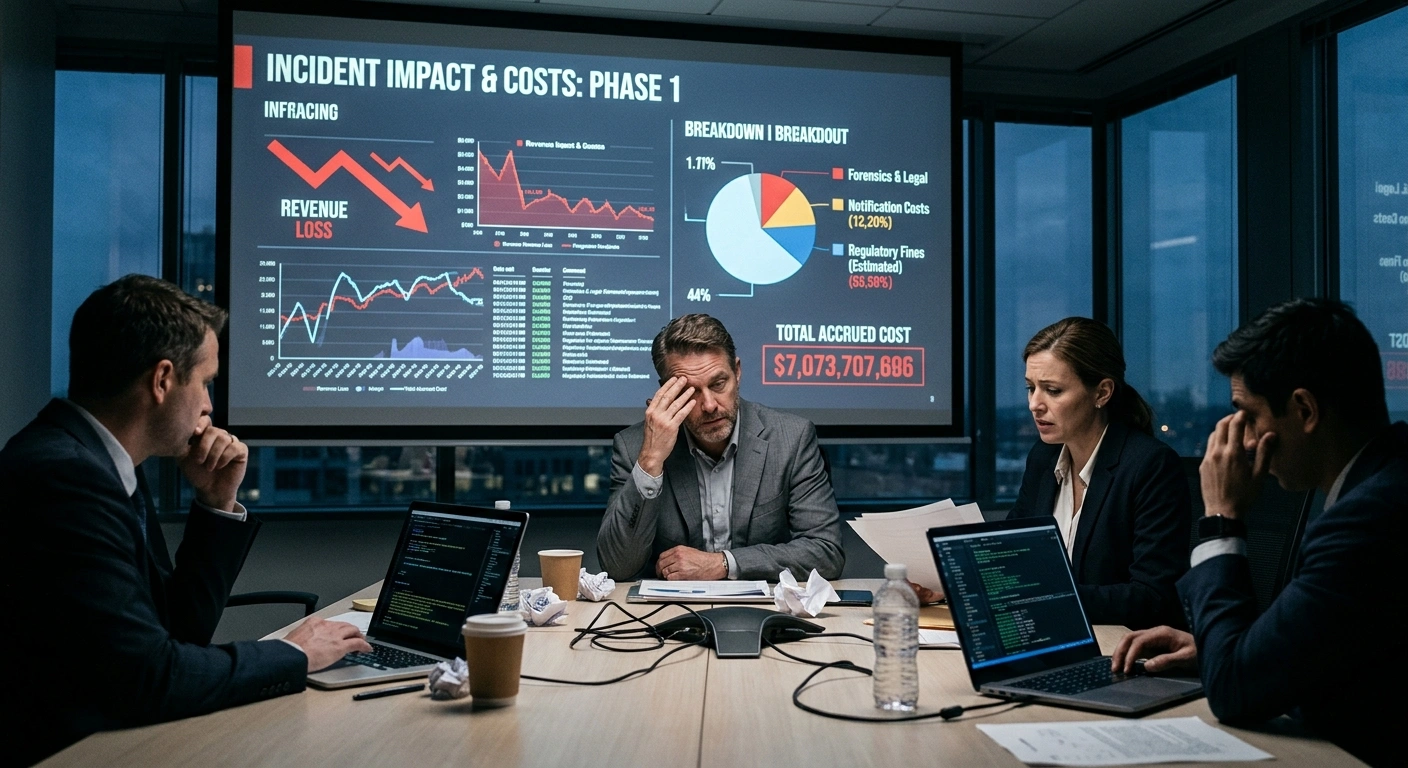
The FBI's Internet Crime Complaint Center consistently ranks New York among the top five states for total cybercrime losses. For Yonkers businesses specifically, the combination of healthcare organizations, financial services firms, and law firms creates a concentrated target profile. The average cost of a data breach for a small business now exceeds $200,000 when recovery, downtime, legal exposure, and mandatory notification costs are combined. For businesses subject to HIPAA or NYDFS, regulatory penalties and remediation requirements add to the baseline.
The more relevant number for most Yonkers businesses is not the average. It is the specific cost of their specific scenario. A ransomware event at a healthcare practice means HIPAA breach notification to affected patients, OCR reporting, potential fines, and weeks of operational disruption. A credential-based breach at a financial advisory firm means NYDFS incident reporting, client notification, and the reputational damage that follows. Cybersecurity services in Yonkers cost a fraction of a single incident. The business case is not a question of budget. It is a question of whether the business can absorb the alternative.
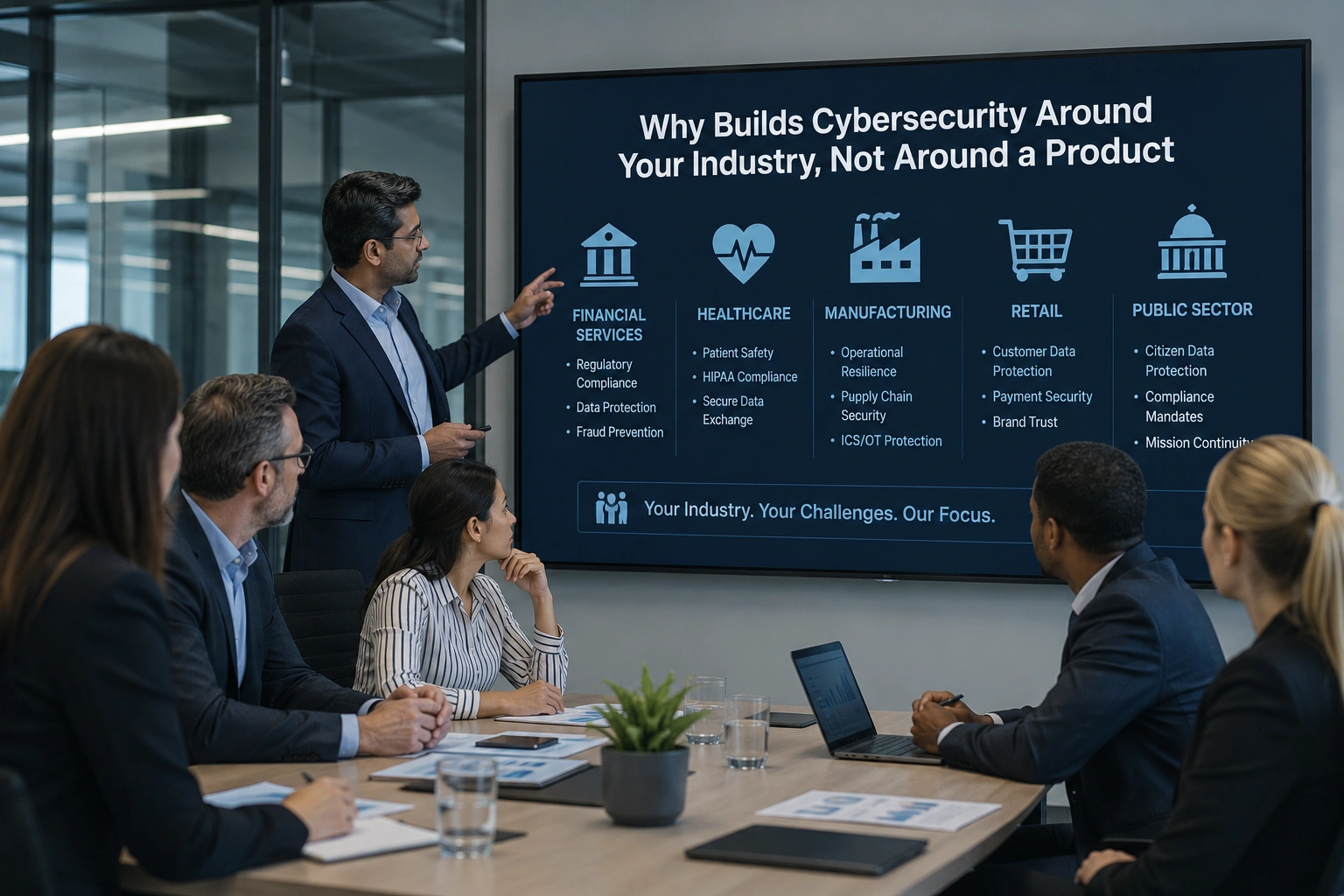
Why KL Tech Consulting Builds Cybersecurity Around Your Industry, Not Around a Product
Most cybersecurity vendors start with a product stack and adapt the pitch to your industry. We start with your industry and build the program from the risk profile outward. A Yonkers healthcare practice and a Yonkers financial advisory firm face different regulatory obligations, different data sensitivity profiles, and different attack patterns. They should not be running the same security program configured from the same template.
We begin every cybersecurity engagement with a written risk assessment that identifies your highest-priority gaps against the framework that governs your specific business. For healthcare, that is the HIPAA Security Rule. For financial services, it is NYDFS Part 500. For organizations without a specific mandate, it is the NIST CSF. That assessment produces a prioritized plan, not a product recommendation. As your local IT company, we bring the compliance literacy to make cybersecurity a business conversation before it becomes a technical one.
What Sets KL Tech Consulting Apart From Other IT Help Desk Providers in Yonkers
The IT help desk market in Yonkers is full of providers who answer the phone on day one and rotate technicians by day thirty. KL Tech Consulting builds every help desk engagement on a documented foundation: we map your environment, catalog your critical systems, and identify your highest-friction points before the first ticket is ever submitted. The engineer who handles your request today has read the same environment documentation that was built at onboarding, which means the conversation starts at resolution, not at introduction. For Yonkers businesses in regulated industries, every ticket is handled with the compliance context of your industry already understood: HIPAA obligations for healthcare clients, NYDFS access control standards for financial firms, and ABA confidentiality requirements for legal practices. We also review ticket data monthly and translate recurring patterns into IT consulting guidance, so the help desk improves the environment instead of just responding to it.
Documented at onboarding. Every device, system, and dependency is mapped before the first ticket arrives.
No rotating technicians. Consistent engineers who know your environment handle every request.
Compliance-aware ticket handling. Industry context applied at the ticket level for healthcare, finance, and legal.
Pattern-based prevention. Monthly ticket data was reviewed and translated into root-cause fixes.
Security is built into support. Phishing triage, suspicious login escalation, and incident documentation included.
Written SLAs before day one. Response and resolution targets are defined and confirmed before the engagement starts.
Know Where Your Cybersecurity Stands Before an Incident Tells You
If you are not certain what your current security posture looks like, that uncertainty is a risk position. KL Tech Consulting is a local IT company serving Yonkers businesses across healthcare, financial services, legal, and professional services. Our cybersecurity services are built for the specific threat environment and compliance obligations of this market.
Contact us to schedule a free cybersecurity assessment. We map your current controls, identify your highest-priority gaps, and give you a written picture of where you stand and what it takes to close the exposure. As your local managed IT services partner, we bring the technical depth and compliance literacy that Yonkers businesses need. Schedule your assessment and start with a clear picture of your risk.
Frequently Asked Questions
What cybersecurity regulations apply to Yonkers businesses?
Several regulatory frameworks apply depending on your industry. Healthcare organizations processing protected health information are subject to HIPAA Security Rule requirements. Financial services entities under New York State oversight face the NYDFS Part 500 cybersecurity program obligations. Law firms carry ABA Rule 1.6 confidentiality obligations extending to every system touching client data. The New York SHIELD Act imposes data security requirements on any business holding private information about New York residents. We assess which frameworks apply during the initial engagement.
How much does a cybersecurity breach cost a small Yonkers business?
The average cost of a data breach for a small business exceeds $200,000 when combining downtime, recovery, legal exposure, regulatory response, and client notification. For healthcare organizations, mandatory HIPAA breach notification and OCR reporting add compliance costs on top of that baseline. For NYDFS-covered financial firms, incident reporting obligations and remediation requirements apply. The cost of a managed cybersecurity program is a fraction of a single incident.
Does cybersecurity include compliance documentation?
Yes. For clients in regulated industries, compliance documentation is built into the cybersecurity engagement. We maintain written records of controls deployed, risk assessments completed, training conducted, and incidents responded to. For HIPAA clients, we document Security Rule safeguards and maintain the risk analysis required for audit readiness. For NYDFS-covered entities, we support annual certification and maintain required policy documentation throughout the year.
What is the difference between antivirus and endpoint detection and response?
Antivirus software detects threats by matching files or code against a database of known malicious signatures. It misses threats that do not match a known pattern. Endpoint detection and response watches behavior across every managed device and identifies threats based on how they act, including novel attacks that no signature database has catalogued yet. For Yonkers businesses handling regulated data, behavioral detection is the standard, not the upgrade.
Can you help us prepare for a cyber insurance application or renewal?
Yes. We provide documentation support for cyber insurance applications and renewals, including evidence of controls deployed, training completion records, incident response plan documentation, and vulnerability scan results. Many insurers now require evidence of MFA enforcement and EDR deployment as baseline conditions for coverage. We maintain that evidence as part of our broader IT services documentation. We maintain that documentation as part of the ongoing cybersecurity program.
How do I get started with cybersecurity services in Yonkers?
The first step is a free cybersecurity assessment. We review your current controls, identify your highest-priority gaps, and give you a written picture of your risk posture and what closing that exposure requires. Contact us to schedule your assessment. There is no obligation and no generic product pitch.
Turn IT Into An Invaluable Asset
Get an IT strategy that justifies your technology investment.
See what our suite of IT solutions can do for your team and your business.
Leverage cutting-edge technology to gain a competitive edge.
Increase productivity, solidify security, and scale your business seamlessly.

